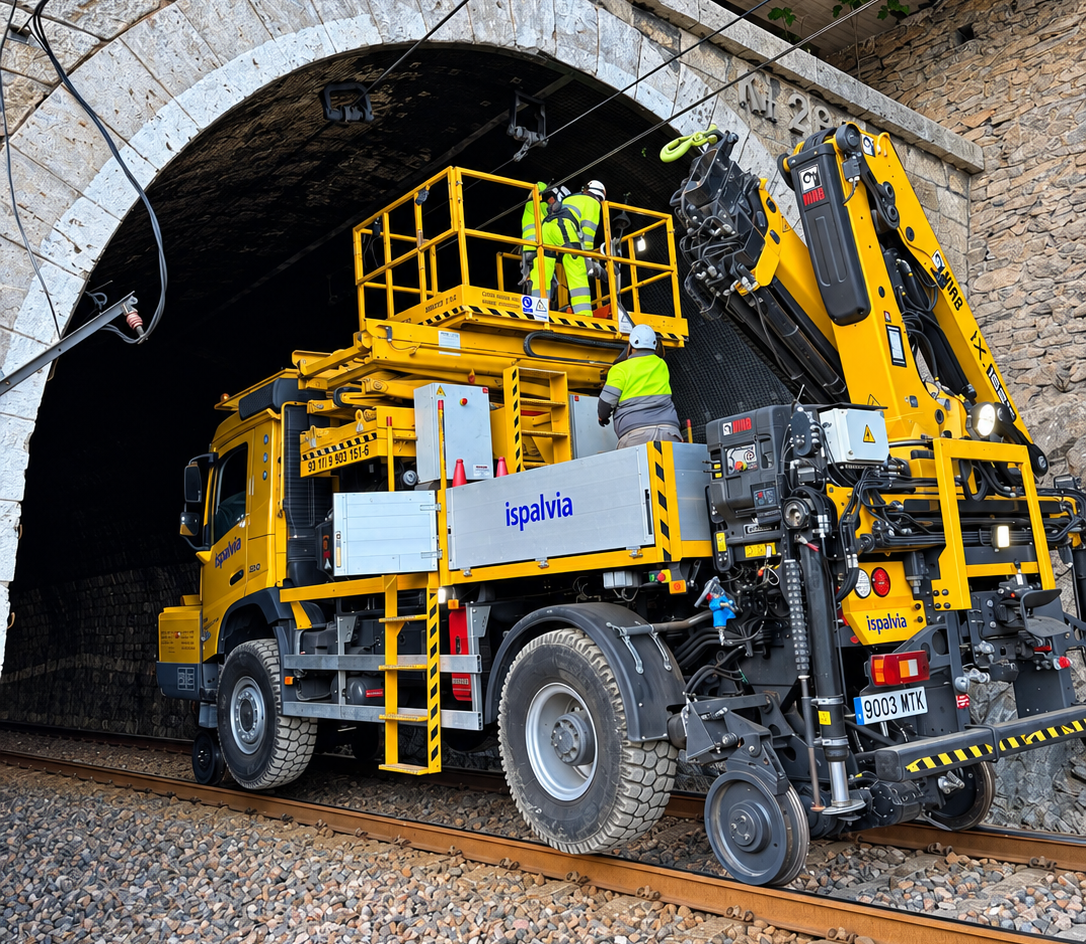
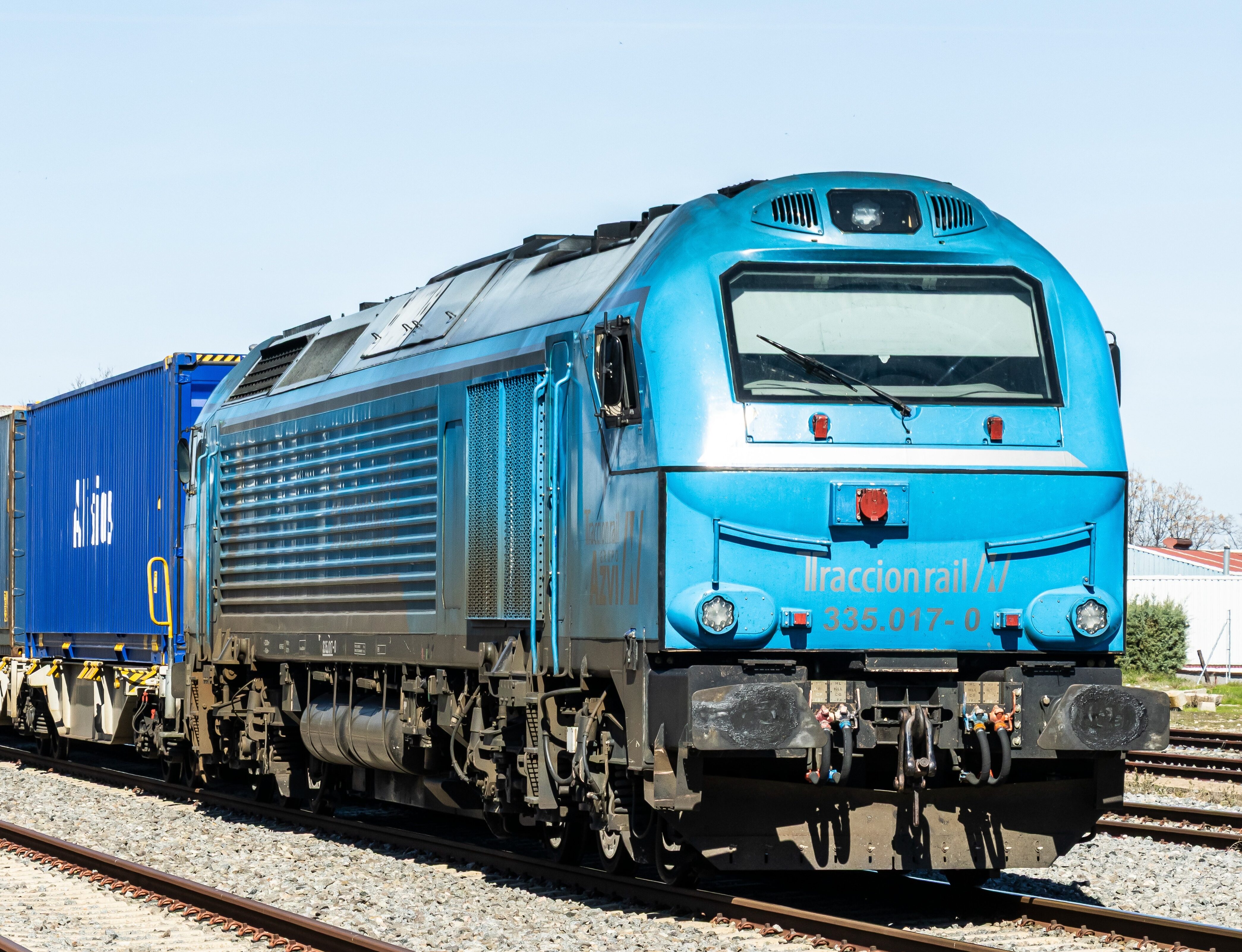
The construction company Azvi has recently finished the platform construction works for the Madrid-Extremadura double-track and international gauge railway line, in its access to Mérida, onthe 8.8 km San Rafael-Cuarto de la Jara section.
Azvi’s works encompass not only the complete construction of the platform including the paving and compacting of the sub-ballast, but also the replacement of one of the current conventional lines on the Aljuncén-Cáceres section, which has been affected by the works.
In addition, several singular works have been carried out along the high-speed section, such as a 90-metre-long four-span viaduct, three overpasses and five underpasses, as well as seven large drainage works.
As for the impact on the conventional railway line, it has been necessary to build a 2.2 km railway bypass to divert rail traffic and avoid interference with the high-speed platform.
Throughout the construction period and until the High-Speed line, currently in service, is completed, the railway bypass built by Azvi will be used to avoid traffic interruptions.
On the other hand, a 1 km alternative to the EX-214 road has been built to overcome the interference generated, meaning that vehicle traffic has been diverted by one of the overpasses included in the works.
One million m3 of excavation
All these works involved the excavation of over one million m3, at least 40%of which required the use of blasting systems., due to the terrain’s excavation possibilities.
The extracted materials have been used at all times in the fill layers, using different types of crushing and screening treatments, achieving the required granulometry according to the requirements of the layers that make up the platform.
At the same time, the use of lime stabilisation has meant that a large proportion of the material has been recovered which, due to its original characteristics, cannot be used directly in the fills without this treatment, thus minimising the generation of waste and reducing the environmental impact.
Extremadura pastureland
Local Extremadura pastureland has been respected at all times, with special attention being paid to the possible effects on the area’s endemic flora and protected faunas well as the different archaeological sites located across the worksites.