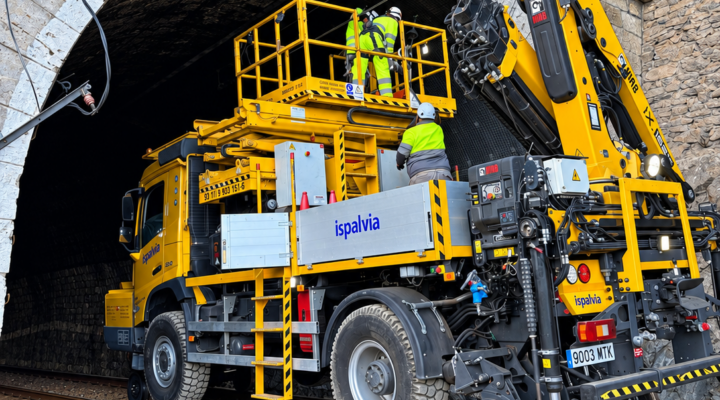
Ispalvia, our subsidiary specialising in industrial works and installations, will carry out the renewal of the railway electrification system serving 13 tunnels and the track sections between them, as part of the works to adapt the Algeciras–Zaragoza Rail Motorway to P400 loading gauge requirements in the Despeñaperros
Traccion Rail, Grupo Azvi’s rail freight transport company, continues to consolidate its growth, with year-end forecasts reflecting a positive trend in its main activity indicators. Among the most noteworthy figures: +28% expected growth in turnover. 1.3 million km operated, 114% more than in 2024. +28%
Azvi is once again taking part in InnoTrans, one of the world’s leading international events for the railway industry, bringing together the sector’s key players in Berlin. Spain’s Minister of Transport and Sustainable Mobility, Óscar Puente, visited the trade fair today to show his support
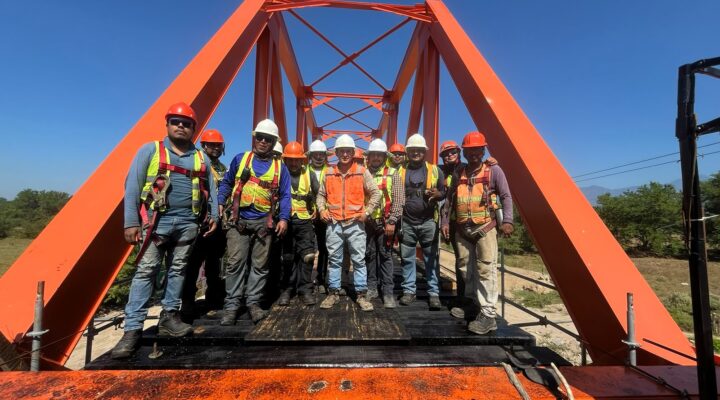
Today, we show you how Construcciones Urales is installing track on the steel structures of Line K of the Isthmus of Tehuantepec Railway in Mexico. The track installation process on steel bridges requires specific procedures adapted to their characteristics in order to meet the geometric
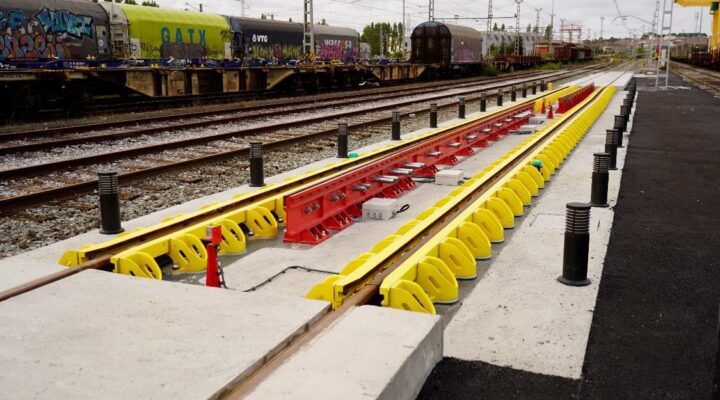
Azvi has completed the installation of an automatic OGI gauge-changing facility at Irún station, including the associated track and electrification works. The project, on the Madrid–Hendaye line, forms part of a pilot test for the use of this technology in commercial freight services, enabling trains to run between networks with different track gauges by automatically changing the gauge of their axles. As this is an experimental installation, the works have been carried out with the least possible impact on the activity of the intermodal terminal and without modifying the existing interlocking system. The OGI system enables trains equipped with variable-gauge axles to automatically adapt their gauge when travelling across different railway networks. This technology contributes to: Eliminating break-of-gauge points. Avoiding axle changes or the transshipment of goods between wagons. Reducing journey times and logistics costs. Improving the interoperability and competitiveness of rail freight transport.
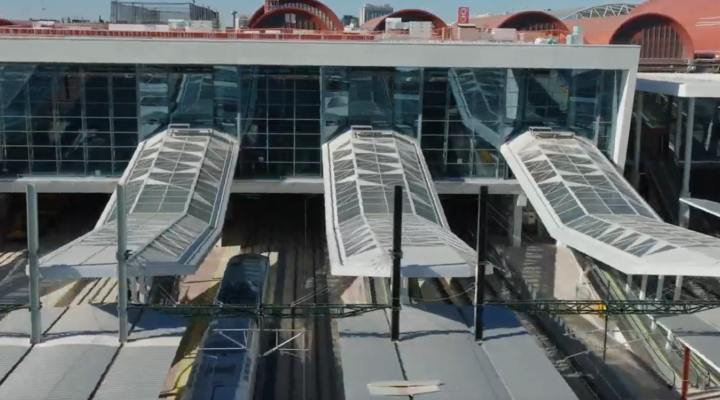
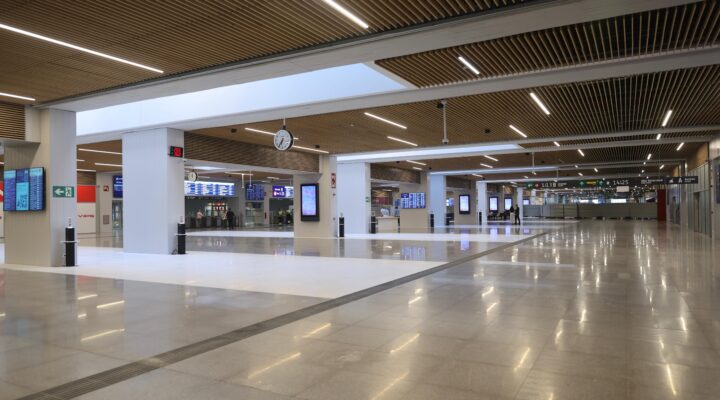
The transformation of this station marks a turning point for one of Spain’s main railway hubs. At Azvi, as part of the joint venture with COMSA, Vías y Construcciones and San José, we are proud to have been involved in a project that has redefined the station’s capacity, functionality and the travel experience of millions of passengers. The station has undergone a major transformation: a main concourse four times larger than before, new high-speed rail tracks and platforms, a complete overhaul of the commuter rail facilities, improved accessibility and intermodality, and infrastructure designed to meet the mobility demands of the future. All of this was achieved without interrupting
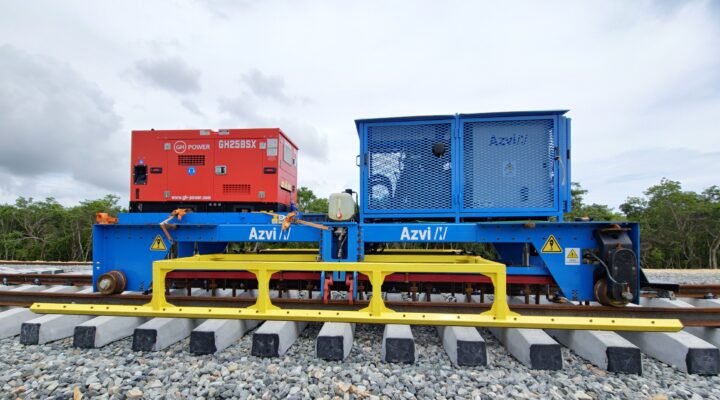
The European Patent Office has granted Azvi a European Patent for its sleeper squaring machine, an innovative device designed to automatically align, position and square sleepers during track installation. This patent represents both technical recognition and legal protection for a solution developed by Azvi’s Technical Office and Innovation Department, which brings together efficiency, precision and quality to optimise the performance of track installation works and advance their automation. The
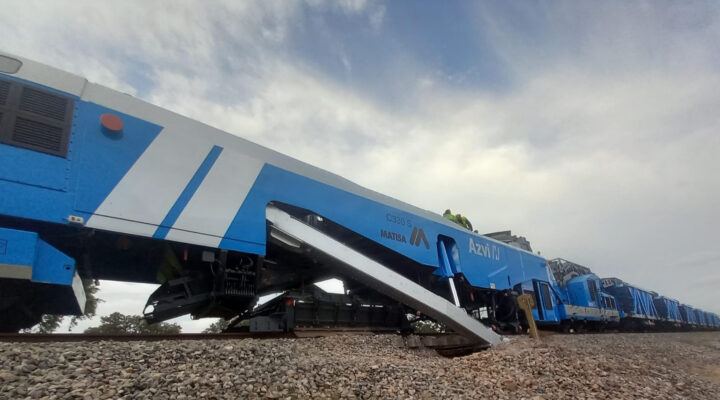
Azvi has completed the renewal of 41.2 km of track on the Calañas–Peguerillas section of the Zafra–Huelva line, a project that is set to improve the reliability and performance of a strategically important railway for the province of Huelva. The main works carried out include: Comprehensive renewal of the main line and passing loop superstructure at Calañas and Gibraleón stations. Installation of new rails, sleepers and ballast, replacement of turnouts and the removal of disused tracks. Reinforcement of cuttings and embankments, drainage improvements and repair of four bridges. Complementary works, including ballast-retaining walls, urban and anti-vandal fencing, and replacement of level crossings. With a €30.8 million budget, the works were carried out along 41.2 km, across the municipalities of Calañas, Trigueros and Gibraleón, in the province of Huelva. With the original alignment kept virtually unchanged, this project significantly improves railway speed, reliability and service quality, contributing to a more efficient, safer and more sustainable railway network. Today, we are revisiting this video showcasing some of the works carried out on this section.
Today, the new main concourse at Madrid’s Chamartín-Clara Campoamor Station enters service, completing one of the largest railway transformations undertaken in Spain in recent years. At Azvi, as part of the joint venture with COMSA, Vías y Construcciones and SANJOSE Constructora, we are proud to have participated in this landmark project
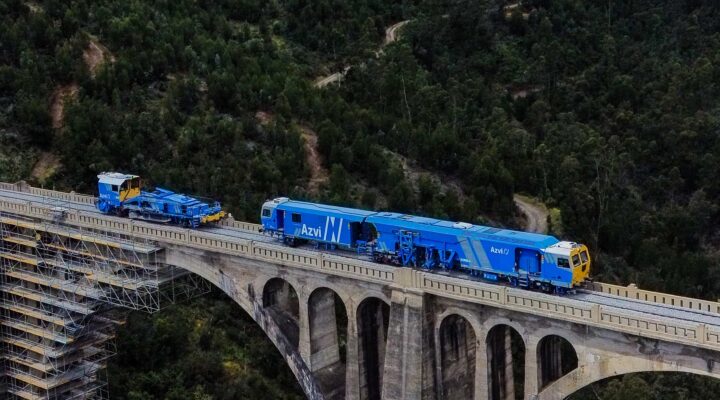
Azvi has begun ballast removal and the replacement of sleepers and rails on the Mérida-Los Rosales line, as part of an important comprehensive renewal project covering 25 km, across two separate sections. In the first 8 km section, between Bienvenida and the area near the